
Root decay sneaks up because it does not hurt until it is deep, and because people who have never had a cavity assume they are done with them.
Why roots decay faster
Enamel is the hardest substance in your body. Root surface is covered by cementum and dentin, which are softer and dissolve at a milder acid level. So the same sipping and snacking that your enamel shrugged off for decades can start a cavity on an exposed root in months.
Add dry mouth from medications, which removes the saliva that neutralizes acid, and the risk climbs again. That combination, recession plus dry mouth, is the pattern I see most.
Early signs you might notice
If you notice any of these, it is worth a look before the next scheduled cleaning. Root cavities near the nerve become complicated quickly.
- A notch or groove right where the tooth meets the gum
- A zing with cold water or cold air on one tooth
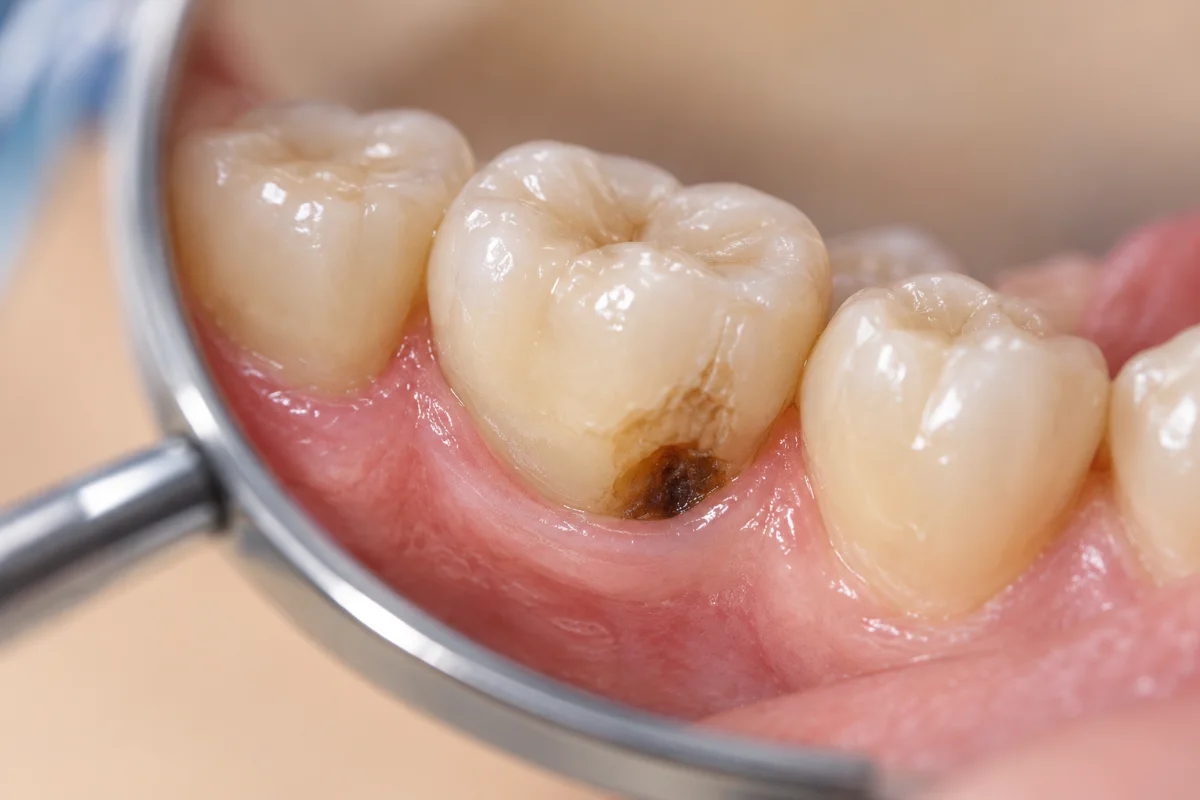
- A dark line or soft spot at the gumline you can feel with a fingernail or floss
- Floss that frays or catches near the gum
How we stop them
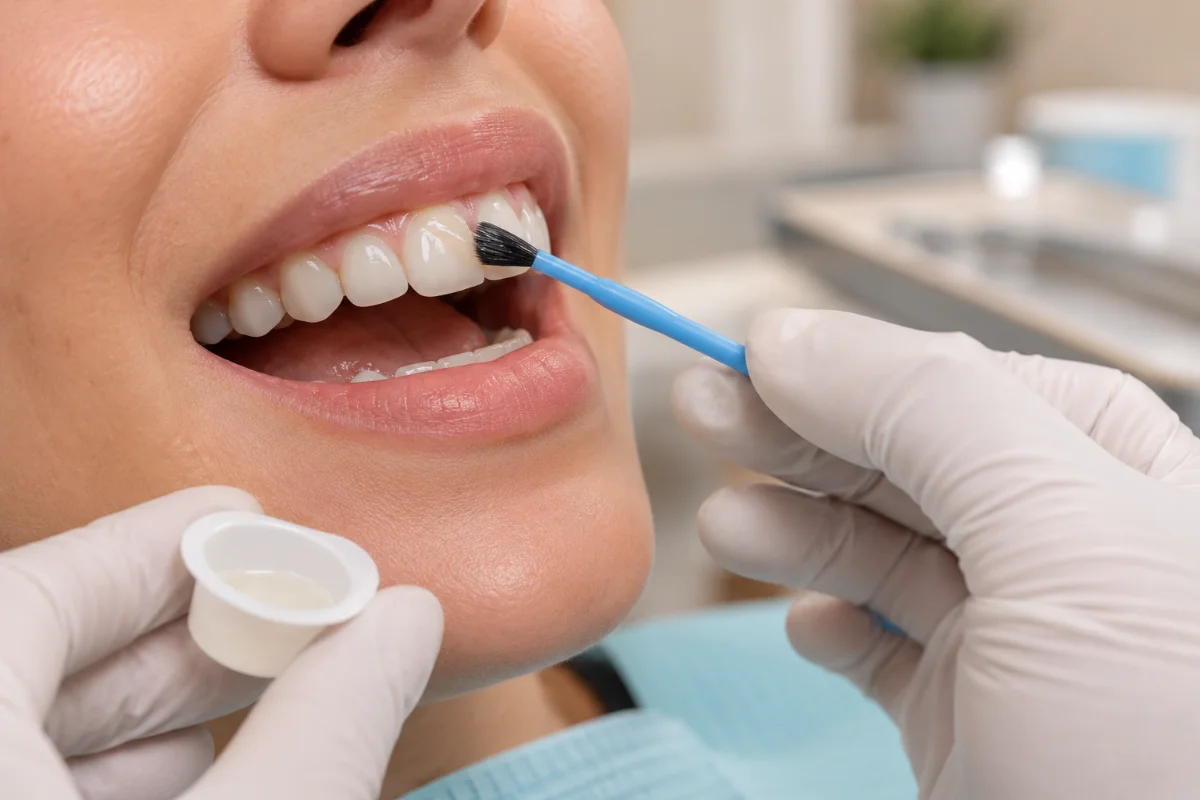
Fluoride. Professional fluoride after cleanings, and often a prescription-strength toothpaste at home, hardens root surface and can arrest very early decay before it needs a filling.
Habits. Reduce contact time with acidic and sugary drinks. Have them with meals, then rinse with water. Brush gently at a 45 degree angle toward the gum with a soft brush.
Saliva. If medications are drying your mouth, tell us. Sugar-free xylitol gum, sipping water, and sometimes a saliva substitute help.
Small fillings when needed. Root cavities that have broken the surface get a small tooth-colored filling. The earlier, the smaller.
What I check at mend
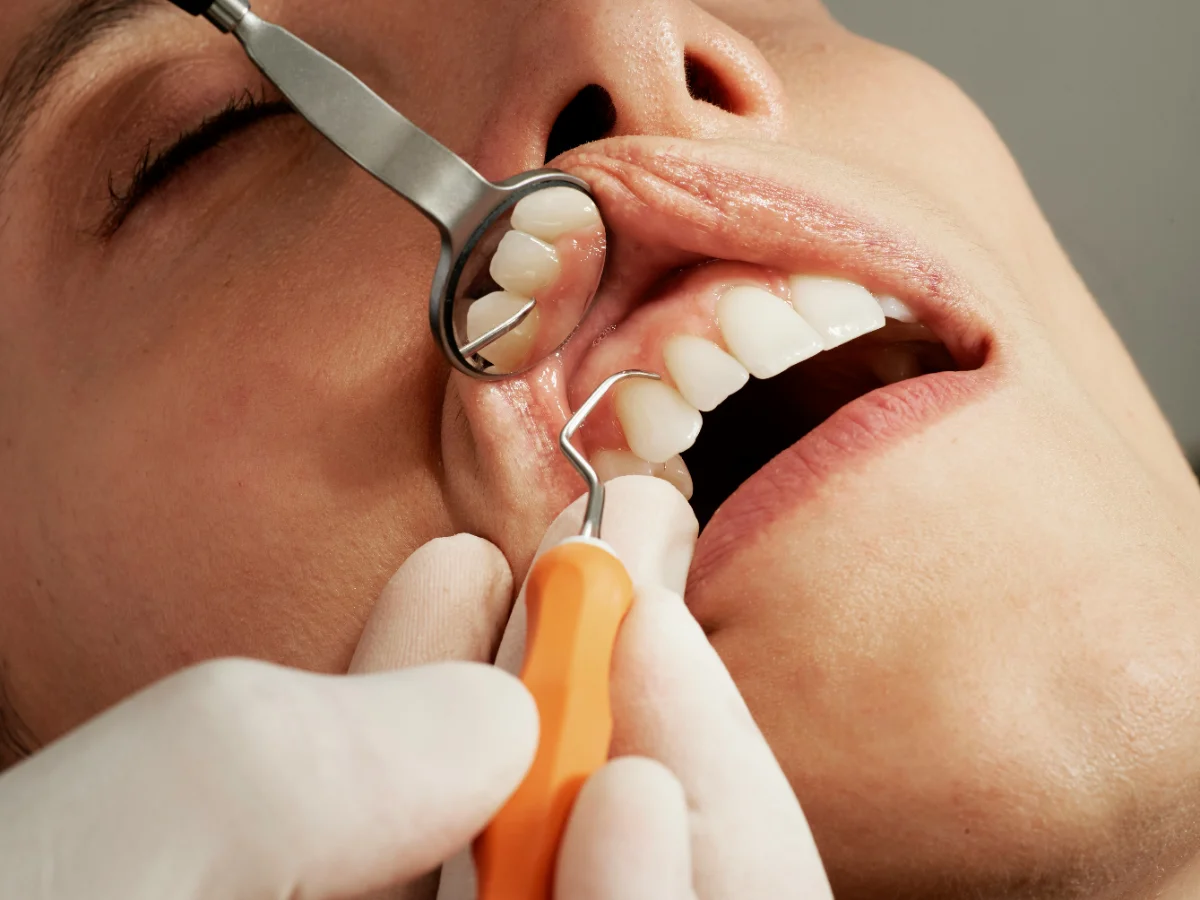
Frank measures recession and notes exposed roots. I run an explorer along the gumline and check X-rays for shadows at the root. If risk is high, fluoride at every cleaning and a closer recall interval. If an early spot is soft but not open, we often watch it with fluoride and recheck. Most PPO plans cover cleanings and exams; some cover adult fluoride when risk is documented.
Notch at the gumline or a cold zing on one tooth?
Call (949) 251-0011 and we will check the roots. How professional fluoride protects them is on our fluoride treatment page.
Quick answers

Owner of mend dental in Irvine and a graduate of the University of the Pacific's Dugoni School of Dentistry. Dr. Sison writes and reviews every article for clinical accuracy.
Meet the team →