Back teeth have deep grooves that a toothbrush cannot reach the bottom of. A sealant is a thin, clear coating painted into those grooves so food and bacteria have nowhere to settle. A few painless minutes, years of protection.
Run your tongue over a back tooth and you will feel the ridges. Between them are grooves narrower than a single toothbrush bristle. Sugar and bacteria settle in, brushing skims over the top, and that is where most cavities on back teeth begin.
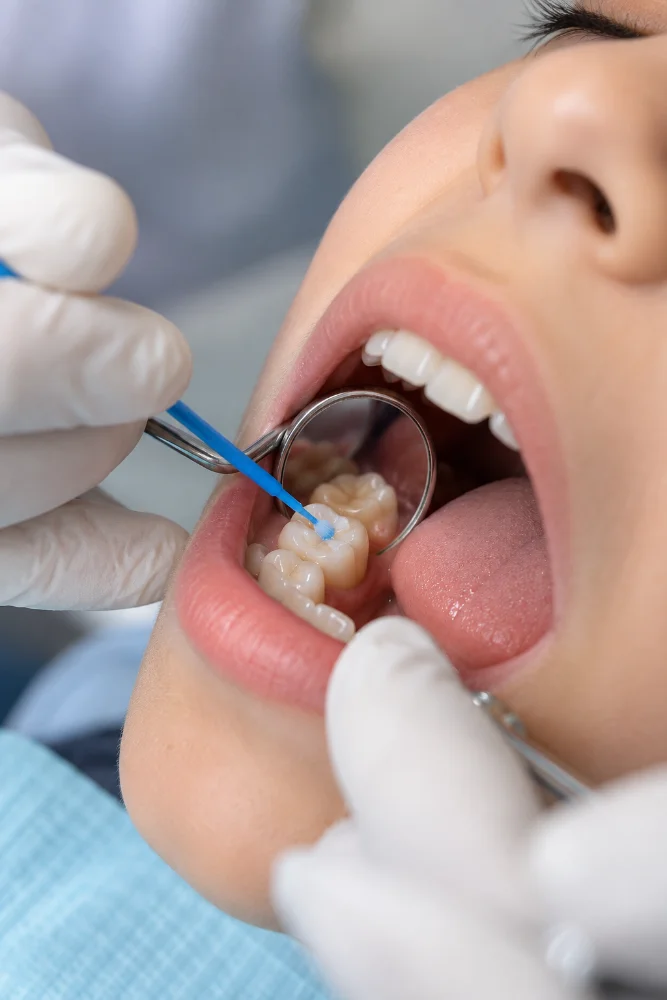
A sealant fills those grooves with a smooth, clear coating. The surface becomes easy to clean, and the tooth underneath stays untouched. It is the least invasive thing we do, and one of the most effective.
Clear or tooth-coloredNo tooth structure removedPainted on, set with a lightChecked at every cleaning
How it works
Four steps. Zero drilling.
Usually done by Frank at the end of a cleaning, one tooth at a time. Nothing to prepare for and nothing to recover from.
1Clean and dryThe tooth is polished and dried so the sealant bonds well.
2A little gelA conditioning gel sits on the grooves for a few seconds, then is rinsed off.
3Paint it onThe liquid sealant is brushed into the grooves and flows to the bottom.
4Set with lightA blue light hardens it in seconds. You can eat right away.
Who it is for
Not just for kids.
Sealants are a habit from childhood dentistry, but the grooves do not go away when you turn eighteen. If a back tooth is healthy and deeply grooved, it is a candidate.
Teens and studentsAdult molars come in around age 12, and the years that follow are when they are most likely to get cavities. Sealing them early is the best-timed prevention there is.
Adults with deep groovesSome people simply have deeper pits in their back teeth. If Frank can see floss catch or a groove that stains, a sealant makes it cleanable.
Anyone who keeps getting cavitiesDry mouth, a sweet tooth, braces, a stressful year. If cavities keep showing up on back teeth, sealants close off the place they start.
Patients who want less dentistryA sealant is the smallest intervention we offer. It is there to prevent the filling, the crown and the appointment you would rather not have.
Sealants go on healthy teeth. A tooth that already has a filling or decay in the groove needs a filling instead, and we will tell you which is which at your exam.
"I went for a regular checkup, the X-rays were done nicely and they have 3D tech that helps view the teeth in great detail. Dr. Monique explained the problem clearly, calmly and in an easy to understand manner."
★★★★★Google review
"Very accommodating every visit. I have a busy schedule and mend is always looking to get my appointment done promptly and within my schedule constraints."
★★★★★Zocdoc review
Sealant questions, answered.
No. Sealants are most common for teens as molars come in, but any adult with deep grooves in their back teeth and no fillings there can benefit, especially if they tend to get cavities.
No. There is no drilling and no numbing. The tooth is cleaned, a gel is applied and rinsed, the sealant is painted on and set with a light. Most people feel nothing at all.
Several years with normal wear. We check them at every cleaning and can touch up or reapply a sealant if it has worn or chipped.
Yes. The sealant hardens fully under the light, so there is no waiting.
Many plans cover sealants for patients under a certain age, and some cover them for adults. We check your benefits before your visit and tell you the cost up front.
Back teeth have deep grooves that a toothbrush cannot reach the bottom of. A sealant is a thin, clear coating painted into those grooves so food and bacteria have nowhere to settle. A few painless minutes, years of protection.
Run your tongue over a back tooth and you will feel the ridges. Between them are grooves narrower than a single toothbrush bristle. Sugar and bacteria settle in, brushing skims over the top, and that is where most cavities on back teeth begin.
A sealant fills those grooves with a smooth, clear coating. The surface becomes easy to clean, and the tooth underneath stays untouched. It is the least invasive thing we do, and one of the most effective.
{{ c }}
How it works
Four steps. Zero drilling.
Usually done by Frank at the end of a cleaning, one tooth at a time. Nothing to prepare for and nothing to recover from.
{{ s.n }}{{ s.t }}{{ s.b }}
Who it is for
Not just for kids.
Sealants are a habit from childhood dentistry, but the grooves do not go away when you turn eighteen. If a back tooth is healthy and deeply grooved, it is a candidate.
{{ w.t }}{{ w.b }}
Sealants go on healthy teeth. A tooth that already has a filling or decay in the groove needs a filling instead, and we will tell you which is which at your exam.
"I went for a regular checkup, the X-rays were done nicely and they have 3D tech that helps view the teeth in great detail. Dr. Monique explained the problem clearly, calmly and in an easy to understand manner."
★★★★★Google review
"Very accommodating every visit. I have a busy schedule and mend is always looking to get my appointment done promptly and within my schedule constraints."

 Google review
 Zocdoc review