
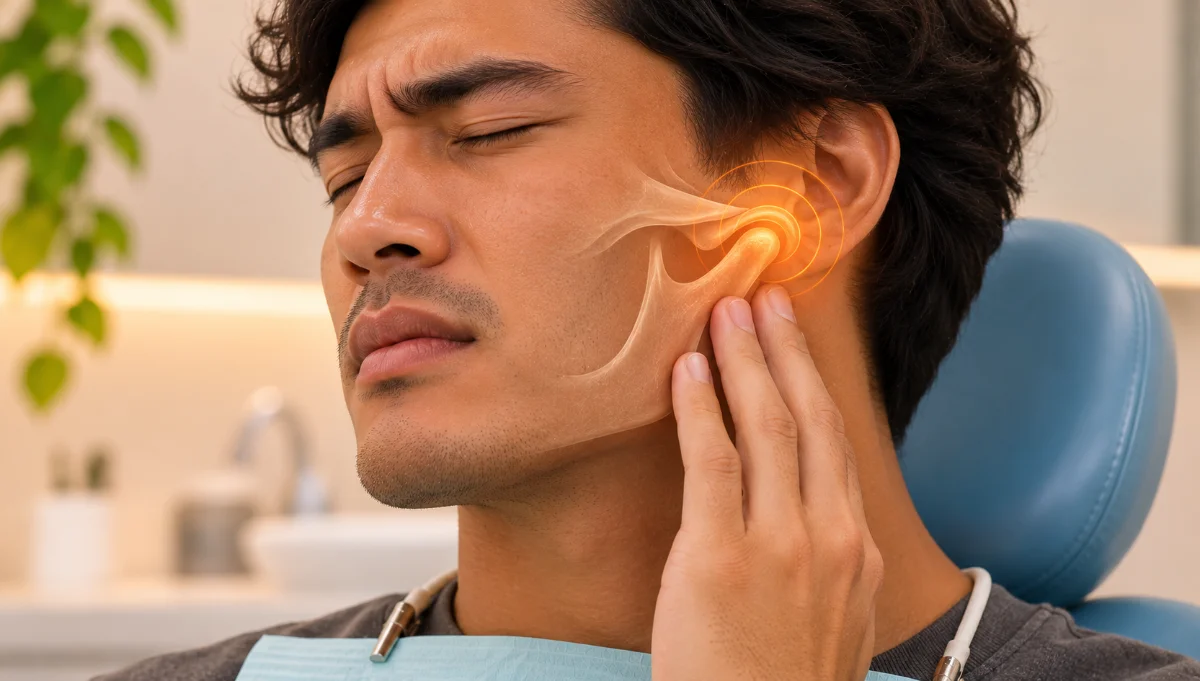
I am not going to diagnose your jaw joint in a blog post. I can tell you what makes a click routine, what makes it worth an exam, and what I check when you come in.
What the click usually is
Your jaw joint sits just in front of each ear, and the muscles that move it are some of the strongest in your body. A click or pop happens when parts of the joint move slightly out of their usual path and snap back. Many people have one and never have a problem with it.
When a click is usually fine
If that is you, I note it in your chart and we watch it at checkups. Nothing else needed.
- No pain with it
- The jaw never catches or locks
- It has not changed in years
- You can open fully and chew normally
When I want to see you
- Pain with the click, in the joint or the muscles around it
- A jaw that catches, sticks, or locks open or closed
- Trouble opening fully
- Morning jaw soreness or headaches at the temples
- A bite that suddenly feels different
- A click that is new or getting louder
The clenching and grinding link
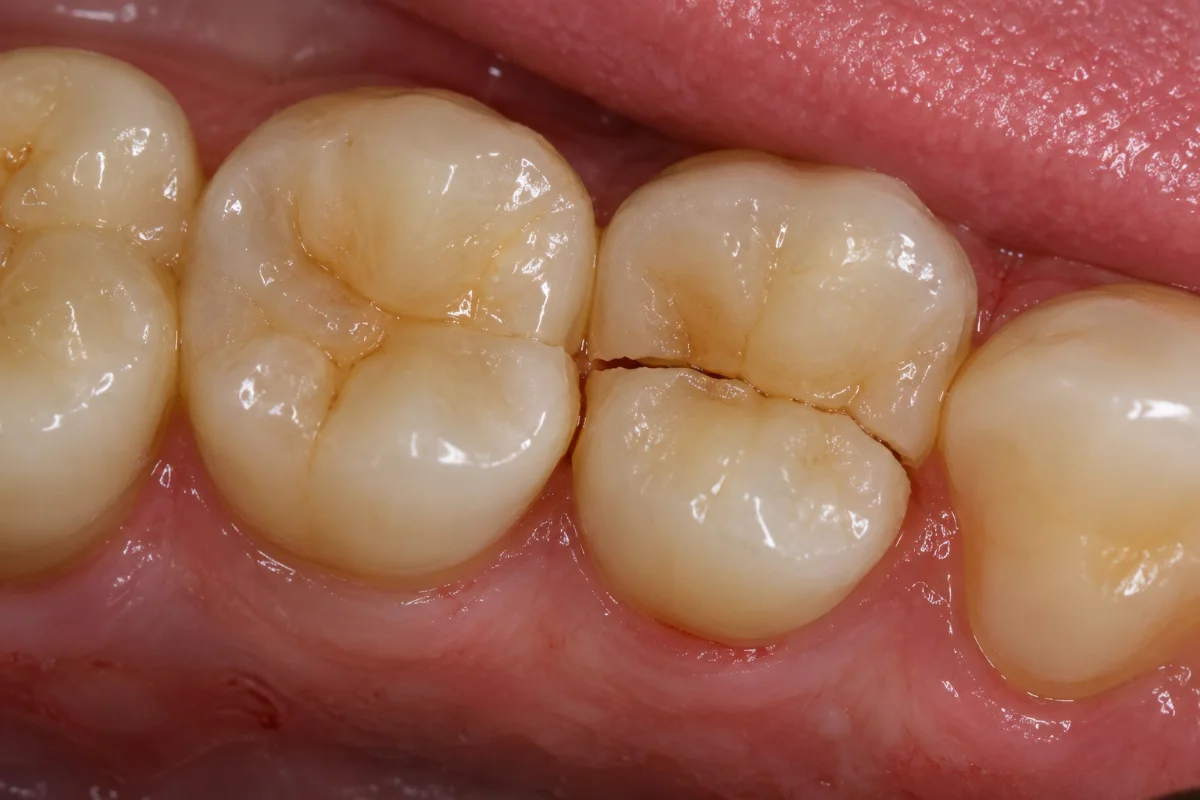
Much of the jaw tension I see comes from clenching or grinding, often at night and often without the person knowing. Grinding can load the teeth with up to 250 pounds of force. The clues are morning jaw tightness, teeth that look flatter or shorter at the edges, and fillings or crowns that keep cracking. The joint clicks because the muscles have been working overtime.
What I check at an exam
Wear patterns on the teeth, which tell me how much grinding is happening and where. Your bite, and whether one spot is hitting first. Cracked fillings or crowns. A 3D iTero scan, which shows wear across all the teeth at once and gives us a baseline to compare against next year. I also feel the jaw muscles and watch how you open.
When a custom night guard helps
If grinding is loading the joint and the teeth, a custom night guard spreads the force and protects both. Ours are slim, about two millimeters, made from a 3D scan, back from the lab in about two weeks, and last three to five years with checks at your cleanings. Boil-and-bite guards from the store shift during the night and wear through, which is why I do not recommend them for grinders. Details on our night guards page.
Daytime habits to notice
Clenching at the desk or in the car. Chewing very hard foods on one side. Resting your chin on your hand. Noticing those is often enough to reduce them, and that alone can quiet a click.
Jaw clicking and you are not sure if it matters?
Call (949) 251-0011 for an exam. We will look at the wear, the bite, and whether a guard would help. More on our night guards page.
Quick answers

Owner of mend dental in Irvine and a graduate of the University of the Pacific's Dugoni School of Dentistry. Dr. Sison writes and reviews every article for clinical accuracy.
Meet the team →