
mend
(949) 251-0011 Book Appointment

One tooth turning darker or gray: what it can mean and what I check at mend.

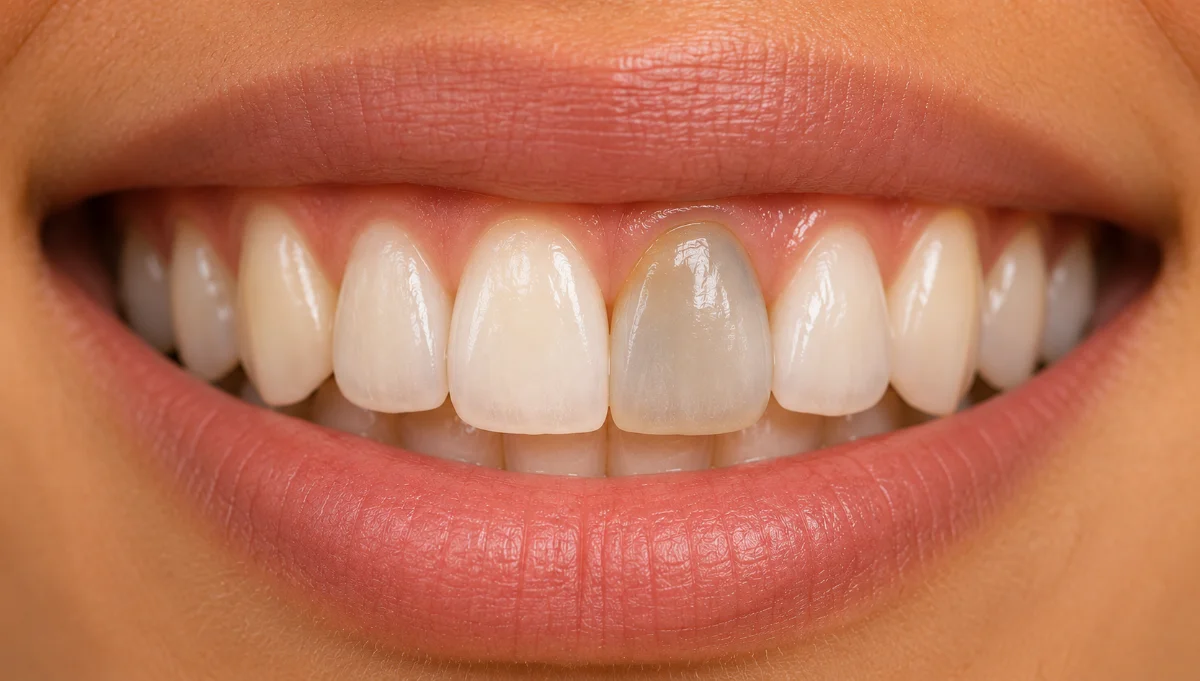
Patients in Irvine often notice one tooth looks different in a photo before it ever hurts. A single darker or gray tooth usually has a specific cause, and at mend dental I can almost always find it with an X-ray, a cold test, and a close look at what is on and around the tooth.

Dr. Monique SisonDr. Monique Sison, DDS
Owner & dentist, mend dental
·4 min read
Front teeth with one noticeably darker tooth

One dark tooth is different from teeth that have yellowed together. Something happened to that tooth specifically.

Why one tooth darkens

Surface stain versus color from inside. Stain sits on the enamel and polishes off. Gray or dark color coming from inside the tooth does not.

An old filling or bonding showing through. Older composite yellows and silver fillings can shadow through thin enamel, especially on front teeth.

A crown edge at a receding gumline. As gums pull back, the metal or darker margin of an older crown shows.

A past bump to the tooth. An injury years ago can slowly darken a tooth as the inside changes.

A nerve that is changing or has died. The tooth stops getting blood supply and gradually grays. This one can happen with no pain at all.

What I check at mend

An X-ray of the tooth and its neighbors, looking at the root tip for signs of infection and at the inside of the tooth. A cold test, which tells me whether the nerve is responding normally, slowly, or not at all. A bite and tapping test. Then a look at any old fillings, bonding or crown edges, and at the gumline. Comparing the tooth to its neighbors on the scan usually makes the cause obvious.

When darkening is a warning sign

A gray tooth with tenderness, swelling, or a pimple-like bump on the gum above it means the nerve has likely died and infection is forming at the root. That is not a cosmetic question anymore. The signs and what to do are on our abscess page. Call the same day.

Options by cause

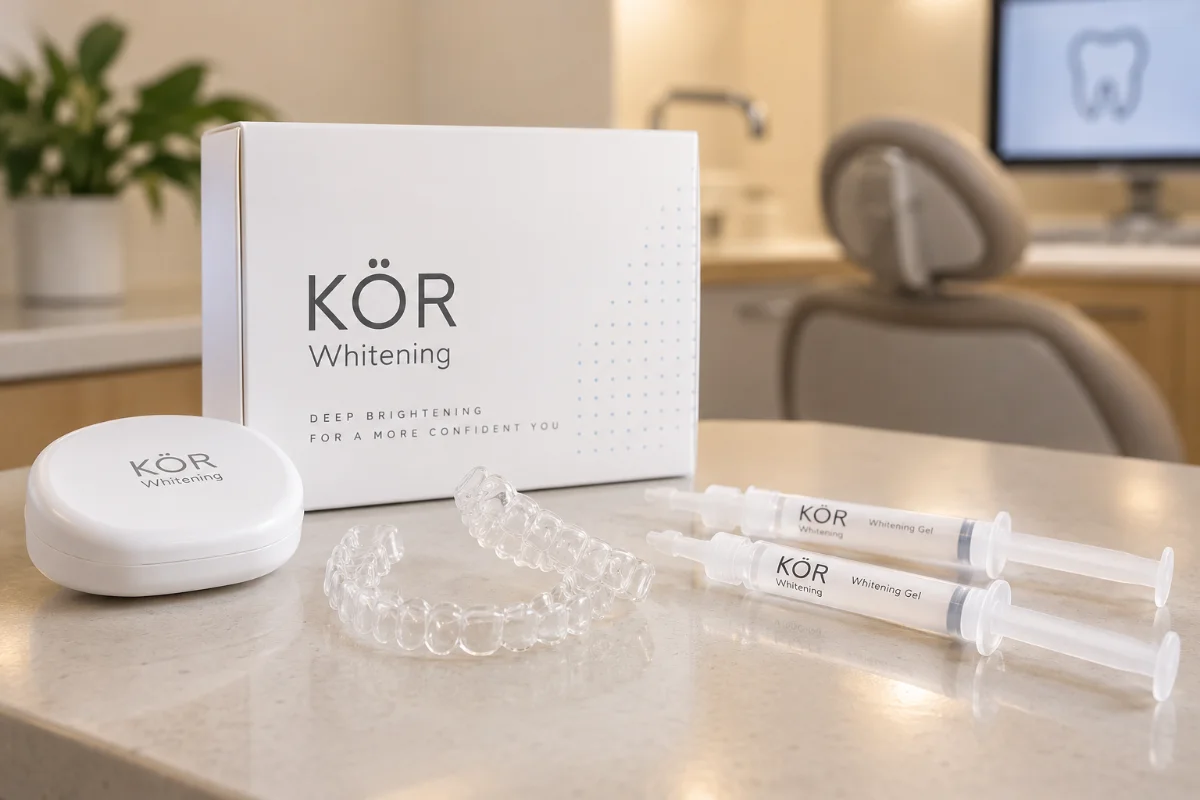
Surface stain: a professional cleaning and polish. An old filling or bonding: replacing it with a shade-matched composite. A crown margin at the gumline: sometimes gum care, sometimes a new crown. Gray from a past injury with a healthy nerve: KöR whitening can lift internal gray on natural teeth, though it does not change crowns or fillings; see whitening with existing dental work. A dead nerve: the tooth needs nerve treatment with a trusted specialist, then usually a crown, and the color is addressed as part of that plan. Bonding or a veneer can cover a stable dark tooth when the structure is sound.

What not to do

Do not put whitening strips on one tooth. They lighten the enamel around the gray unevenly and the tooth looks worse. Do not wait on swelling or a gum bump hoping it resolves. And do not assume a painless gray tooth is harmless until it has been tested.

One tooth looking different?

Call (949) 251-0011. An X-ray and cold test take minutes and tell us whether it is cosmetic or something to treat. What we check is on our toothache page.

Quick answers

Often, but not always. A cold test and X-ray tell us whether the nerve is alive, slow, or gone.

Sometimes, if the tooth is natural and the nerve is healthy. KöR whitening can lift internal gray. It does not change crowns or fillings, and strips on one tooth make it look worse.

No. One tooth darkening has a cause specific to that tooth. Neighboring teeth are not affected.

Yes, enough to have it tested. A dead nerve can gray a tooth with no pain, and infection can follow.

Dr. Monique Sison
Written byDr. Monique Sison, DDS

Owner of mend dental in Irvine and a graduate of the University of the Pacific's Dugoni School of Dentistry. Dr. Sison writes and reviews every article for clinical accuracy.

Meet the team →

Tags:One tooth darker than the othersGray toothTooth turning darkDead tooth signsDentist Irvine

Keep reading

All articles →
mend
(949) 251-0011 Book Appointment

One tooth turning darker or gray: what it can mean and what I check at mend.

Patients in Irvine often notice one tooth looks different in a photo before it ever hurts. A single darker or gray tooth usually has a specific cause, and at mend dental I can almost always find it with an X-ray, a cold test, and a close look at what is on and around the tooth.

Dr. Monique Sison, DDS
Owner & dentist, mend dental
·4 min read

One dark tooth is different from teeth that have yellowed together. Something happened to that tooth specifically.

Why one tooth darkens

Surface stain versus color from inside. Stain sits on the enamel and polishes off. Gray or dark color coming from inside the tooth does not.

An old filling or bonding showing through. Older composite yellows and silver fillings can shadow through thin enamel, especially on front teeth.

A crown edge at a receding gumline. As gums pull back, the metal or darker margin of an older crown shows.

A past bump to the tooth. An injury years ago can slowly darken a tooth as the inside changes.

A nerve that is changing or has died. The tooth stops getting blood supply and gradually grays. This one can happen with no pain at all.

What I check at mend

An X-ray of the tooth and its neighbors, looking at the root tip for signs of infection and at the inside of the tooth. A cold test, which tells me whether the nerve is responding normally, slowly, or not at all. A bite and tapping test. Then a look at any old fillings, bonding or crown edges, and at the gumline. Comparing the tooth to its neighbors on the scan usually makes the cause obvious.

When darkening is a warning sign

A gray tooth with tenderness, swelling, or a pimple-like bump on the gum above it means the nerve has likely died and infection is forming at the root. That is not a cosmetic question anymore. The signs and what to do are on our abscess page. Call the same day.

Options by cause

Surface stain: a professional cleaning and polish. An old filling or bonding: replacing it with a shade-matched composite. A crown margin at the gumline: sometimes gum care, sometimes a new crown. Gray from a past injury with a healthy nerve: KöR whitening can lift internal gray on natural teeth, though it does not change crowns or fillings; see whitening with existing dental work. A dead nerve: the tooth needs nerve treatment with a trusted specialist, then usually a crown, and the color is addressed as part of that plan. Bonding or a veneer can cover a stable dark tooth when the structure is sound.

What not to do

Do not put whitening strips on one tooth. They lighten the enamel around the gray unevenly and the tooth looks worse. Do not wait on swelling or a gum bump hoping it resolves. And do not assume a painless gray tooth is harmless until it has been tested.

One tooth looking different?

Call (949) 251-0011. An X-ray and cold test take minutes and tell us whether it is cosmetic or something to treat. What we check is on our toothache page.

Quick answers

{{ f.a }}

Written byDr. Monique Sison, DDS

Owner of mend dental in Irvine and a graduate of the University of the Pacific's Dugoni School of Dentistry. Dr. Sison writes and reviews every article for clinical accuracy.

Meet the team →

Tags:{{ tg }}

Keep reading

All articles →