
A veneer is a cosmetic layer. A crown is structural protection. Once you see it that way, the choice usually makes itself. Here's how I explain it in the chair.
What a veneer is
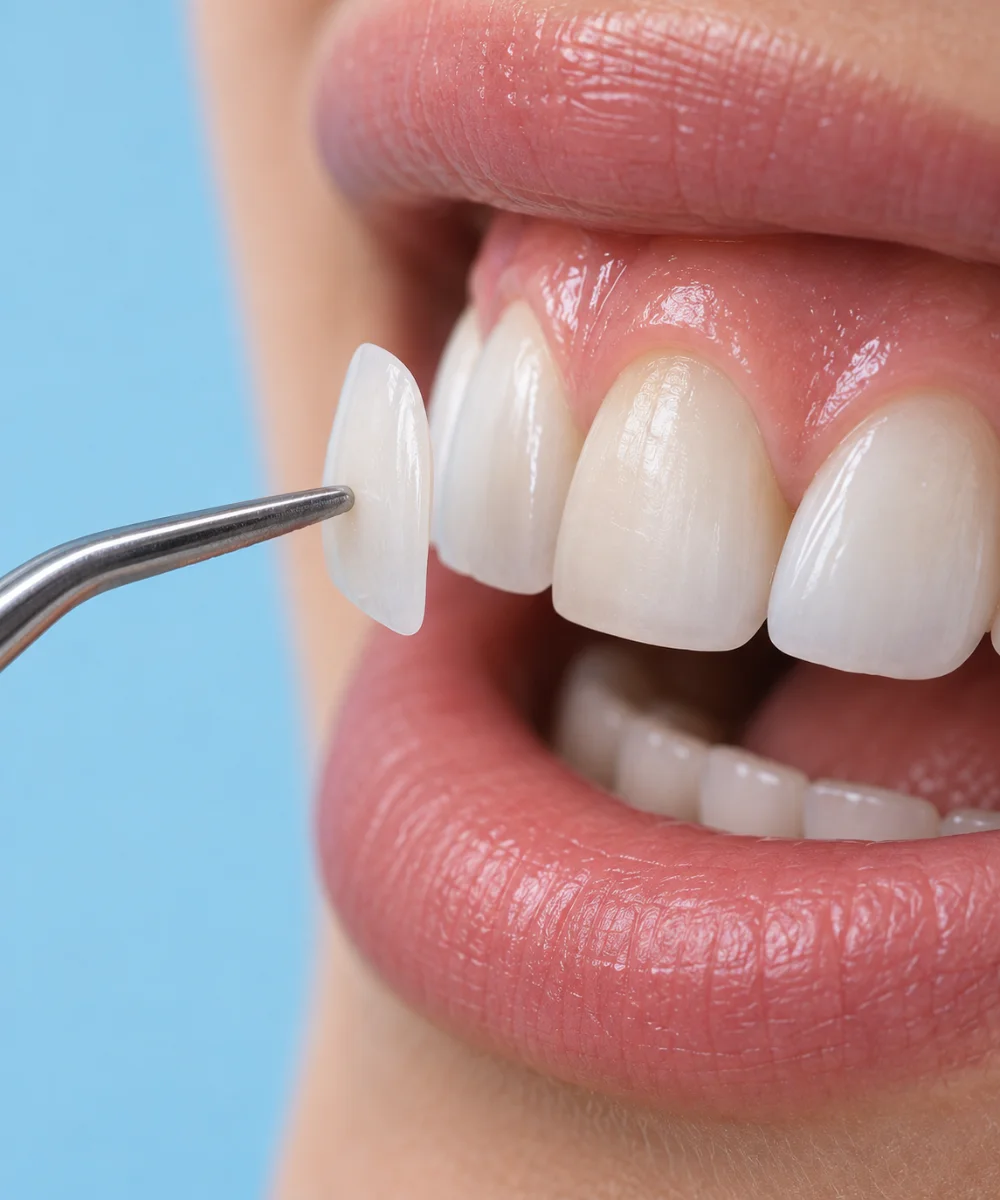
A thin shell of porcelain bonded to the front of a tooth. It changes color, shape and symmetry while leaving almost all of the tooth intact, often with less than half a millimeter of enamel smoothed, and sometimes none.
What a crown is
A cap that covers the whole tooth. Getting there means trimming enamel all the way around, so a crown is something I reserve for a tooth that genuinely needs protecting: a large crack, heavy decay, a root canal, or an old filling that's failing.
The comparison, side by side
Veneers cover the front surface; crowns cover the entire tooth. Veneer prep is minimal; crown prep is moderate to significant. Veneers are for appearance; crowns are for structure. Both last 10 to 15 years or more with good care, and both are shade-matched to your natural teeth.
The option in between
If a back tooth is damaged but not to the point of needing a crown, I'll often recommend an onlay instead. It replaces only the damaged part and keeps the rest of your tooth. It takes more precision than a crown, and I choose it whenever the tooth allows, because enamel I don't remove is enamel you keep for life.
How I decide
Healthy tooth, cosmetic goal: veneer. Compromised tooth, structural goal: onlay if possible, crown if not. If someone recommends crowns on healthy front teeth purely for looks, ask why. You may be giving up a lot of tooth for a result a veneer could deliver.
Keep as much of your tooth as you can.
Whether you're considering veneers, crowns or both, we'll assess the tooth first and the look second. Read more about veneers and crowns at mend, or book a free consultation.
Quick answers

Owner of mend dental in Irvine and a graduate of the University of the Pacific's Dugoni School of Dentistry. Dr. Sison writes and reviews every article for clinical accuracy.
Meet the team →