
mend
(949) 251-0011 Book Appointment

Dark stains in the grooves of your back teeth: stain, cavity, or a sealant?

A dark groove can be surface stain, early decay, or decay already under the surface, and you cannot tell which by looking in a mirror. At mend dental in Irvine, it gets checked at your exam, and the answer decides between three very different next steps.

Dr. Monique SisonDr. Monique Sison, DDS
Owner & dentist, mend dental
·4 min read
Close-up of a molar with a dark stained groove

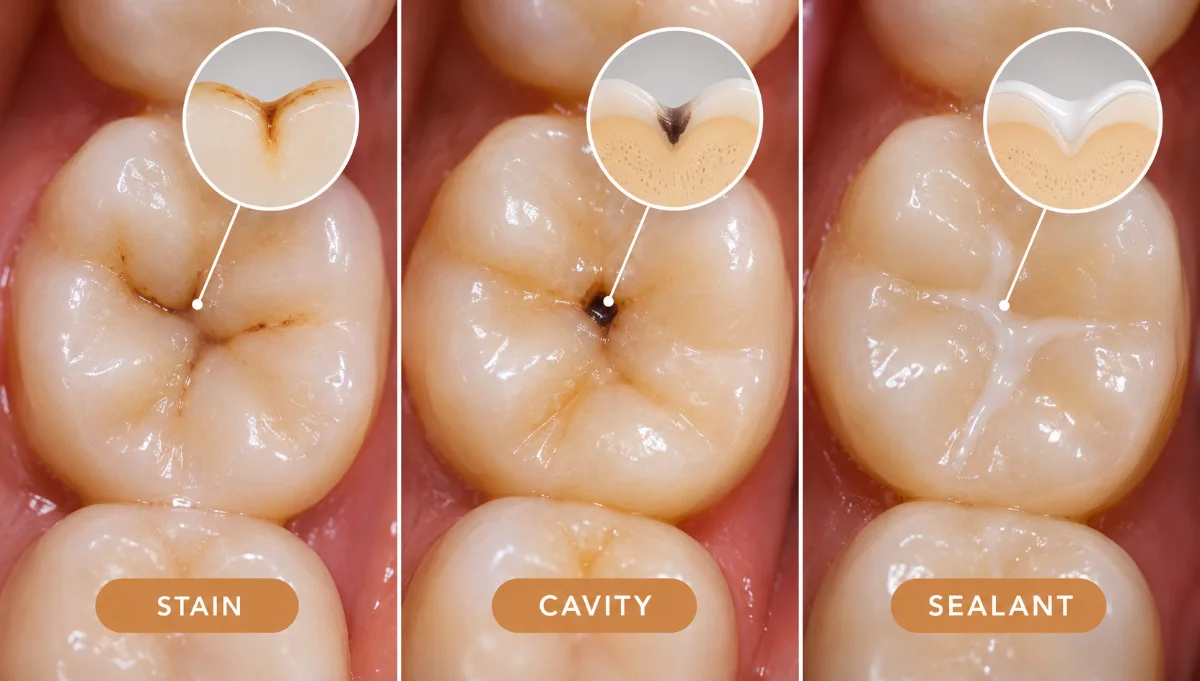
Back-tooth grooves are narrower than a toothbrush bristle. Stain, plaque and bacteria all collect there, which is why the same groove can be harmless on one tooth and a cavity on the next.

Why grooves stain and decay

Molars have deep pits and fissures on the chewing surface. Coffee, tea and food pigments settle into them and leave a dark line that is purely cosmetic. But the same groove traps bacteria that acid-etch the enamel at the bottom, where a brush cannot reach. Decay there can spread under the surface while the opening stays small, which is why groove decay sometimes hides on X-rays until it is bigger than it looks.

How I check a stained groove

Frank looks and measures during your cleaning. I examine the tooth with an explorer and good light. X-rays are reviewed with Overjet AI overlays, and every finding is mine to confirm. When a closer look helps, an iTero Lumina scan shows the groove magnified on screen. X-rays themselves are taken based on your risk, usually every 12 to 24 months for low-risk adults.

The three outcomes

Healthy but stained and deep. The enamel is sound, the groove is just hard to clean. A sealant flows into the groove and seals it so plaque cannot collect. Quick, painless, no drilling.

Early enamel change. The groove is soft but has not broken through. We watch it with fluoride and a recheck date rather than drill it, the same way I handle any small cavity I monitor.

Decay in the groove. The enamel has broken through. A small tooth-colored filling removes the decay and restores the surface. Sealants only go on healthy teeth, so a sealant over decay is never the answer.

Who should ask about it

  • Teens, as adult molars come in around age 12 and grooves are deepest
  • Adults with naturally deep grooves who keep getting cavities on back teeth
  • Anyone with dry mouth from medications, which raises groove decay risk
  • Anyone who has noticed a dark line that was not there a year ago

Coverage, stated plainly

Many plans cover sealants for children and teens under a certain age, and some cover them for adults when risk is documented. Fillings are covered in part by most PPO plans. We check your benefits before your visit so you know what to expect.

Noticed a dark line on a back tooth?

Call (949) 251-0011 and we will tell you which of the three it is. How sealants work is on our dental sealants page.

Quick answers

Not always. They can be surface stain, early enamel change, or decay. Only an exam with X-rays and a close look can tell which.

Only if the enamel underneath is healthy. Sealants never go over decay.

Yes, when grooves are deep and cavity risk is elevated. Some plans cover adult sealants when risk is documented.

An explorer and good light, X-rays reviewed with Overjet AI overlays, and an iTero Lumina scan when magnification helps.

Dr. Monique Sison
Written byDr. Monique Sison, DDS

Owner of mend dental in Irvine and a graduate of the University of the Pacific's Dugoni School of Dentistry. Dr. Sison writes and reviews every article for clinical accuracy.

Meet the team →


Tags:Stained grooves on molarsDark lines on back teethDental sealants adultsPit and fissure decayDentist Irvine

Keep reading

All articles →
mend
(949) 251-0011 Book Appointment

Dark stains in the grooves of your back teeth: stain, cavity, or a sealant?

A dark groove can be surface stain, early decay, or decay already under the surface, and you cannot tell which by looking in a mirror. At mend dental in Irvine, it gets checked at your exam, and the answer decides between three very different next steps.

Dr. Monique Sison, DDS
Owner & dentist, mend dental
·4 min read

Back-tooth grooves are narrower than a toothbrush bristle. Stain, plaque and bacteria all collect there, which is why the same groove can be harmless on one tooth and a cavity on the next.

Why grooves stain and decay

Molars have deep pits and fissures on the chewing surface. Coffee, tea and food pigments settle into them and leave a dark line that is purely cosmetic. But the same groove traps bacteria that acid-etch the enamel at the bottom, where a brush cannot reach. Decay there can spread under the surface while the opening stays small, which is why groove decay sometimes hides on X-rays until it is bigger than it looks.

How I check a stained groove

Frank looks and measures during your cleaning. I examine the tooth with an explorer and good light. X-rays are reviewed with Overjet AI overlays, and every finding is mine to confirm. When a closer look helps, an iTero Lumina scan shows the groove magnified on screen. X-rays themselves are taken based on your risk, usually every 12 to 24 months for low-risk adults.

The three outcomes

Healthy but stained and deep. The enamel is sound, the groove is just hard to clean. A sealant flows into the groove and seals it so plaque cannot collect. Quick, painless, no drilling.

Early enamel change. The groove is soft but has not broken through. We watch it with fluoride and a recheck date rather than drill it, the same way I handle any small cavity I monitor.

Decay in the groove. The enamel has broken through. A small tooth-colored filling removes the decay and restores the surface. Sealants only go on healthy teeth, so a sealant over decay is never the answer.

Who should ask about it

  • Teens, as adult molars come in around age 12 and grooves are deepest
  • Adults with naturally deep grooves who keep getting cavities on back teeth
  • Anyone with dry mouth from medications, which raises groove decay risk
  • Anyone who has noticed a dark line that was not there a year ago

Coverage, stated plainly

Many plans cover sealants for children and teens under a certain age, and some cover them for adults when risk is documented. Fillings are covered in part by most PPO plans. We check your benefits before your visit so you know what to expect.

Noticed a dark line on a back tooth?

Call (949) 251-0011 and we will tell you which of the three it is. How sealants work is on our dental sealants page.

Quick answers

{{ f.a }}

Written byDr. Monique Sison, DDS

Owner of mend dental in Irvine and a graduate of the University of the Pacific's Dugoni School of Dentistry. Dr. Sison writes and reviews every article for clinical accuracy.

Meet the team →

Tags:{{ tg }}

Keep reading

All articles →