
mend
(949) 251-0011 Book Appointment

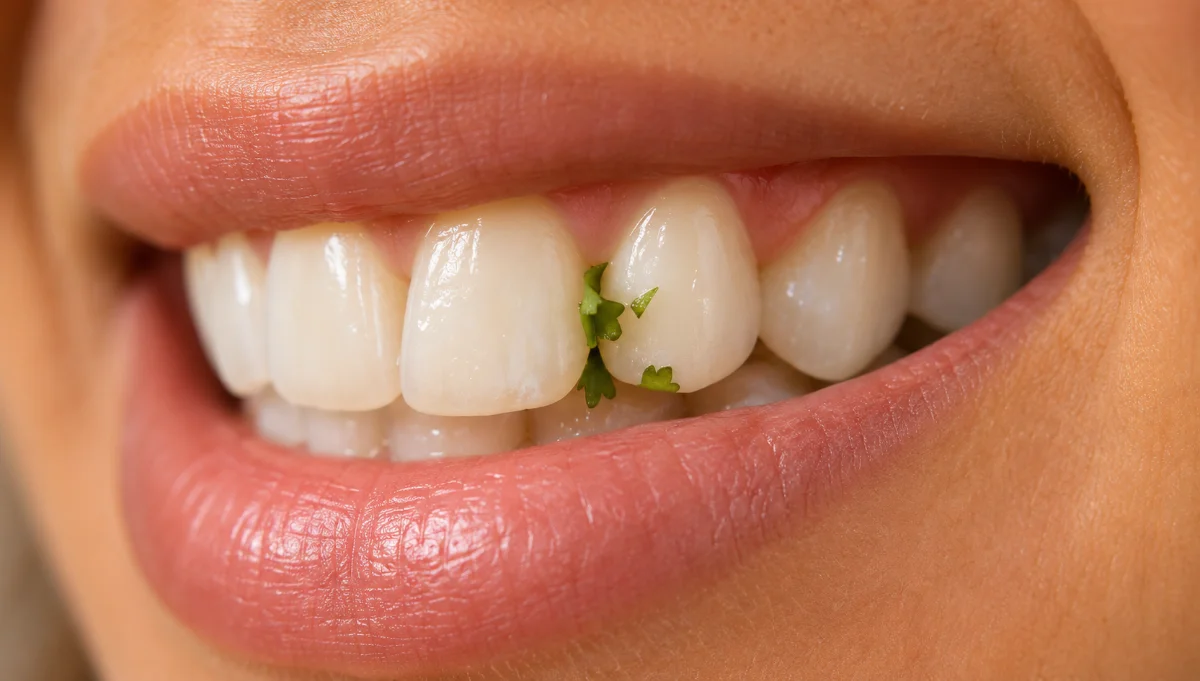
Food keeps getting stuck between the same two teeth: what I check at mend.

One spot that always catches food is not bad luck. It is the tooth telling you the contact between it and its neighbor has changed. At mend dental in Irvine, I check four things, and one of them is almost always the answer.

Dr. Monique SisonDr. Monique Sison, DDS
Owner & dentist, mend dental
·4 min read
Floss test at a tooth contact on a 3D scan screen

Teeth are supposed to touch their neighbors firmly enough that food slides past. When a spot starts trapping, something opened that gap.

The four usual causes

A cavity between the two teeth. Decay softens the contact and creates a ledge food packs into. This is the one I most want to find early.

An old filling or crown edge that has pulled away or cracked. A tiny step at the margin catches fibers every meal.

A gap that opened as gums receded. The teeth still touch at the top, but the space near the gum is now open, and food wedges down into it.

Teeth that shifted or wore. A missing tooth, grinding, or simple drift over years can loosen a contact that used to be tight.

How I check at mend

X-rays and the 3D iTero scan reviewed with you on screen, so you see the contact magnified. A floss test at that spot: floss that snaps through, frays, or catches tells me about the contact and the edges. Then I check every filling and crown margin nearby with an explorer. This takes a few minutes and usually points to one cause.

Why it matters

Trapped food feeds bacteria right at the edge of the tooth, which is where decay starts and where old fillings and crown margins fail. It also inflames the gum between the teeth, which bleeds and recedes further, opening the gap more. A spot that traps food today is a cavity or a gum pocket in a year if nothing changes.

What the fix usually is, smallest first

Most often, a tooth-colored composite filling that rebuilds the contact so the two teeth touch properly again. About 30 to 60 minutes, one visit. If an old filling has failed and the walls are thin, an onlay or crown restores the shape. If recession is the cause and the teeth are sound, the answer is gum care and a cleaning tool for that spot rather than drilling.

What you can do until then

  • Floss before you brush so toothpaste fluoride reaches the spot
  • Clean that contact gently every night; do not let food sit overnight
  • Do not force toothpicks down into the gum; it makes the pocket worse
  • A water flosser aimed at the spot clears it without trauma

Signs to come in sooner

Lingering cold sensitivity at that tooth. Bleeding or swelling of the gum between them. A rough edge your tongue keeps finding. Any of those means the spot has moved past annoying.

Same spot catching food every meal?

Call (949) 251-0011 and we will show you why on the X-ray and scan. How fillings are done is on our dental fillings page.

Quick answers

The contact between those two teeth has changed: a cavity, a failed filling or crown edge, gum recession, or teeth that shifted.

It is an early warning. Trapped food feeds decay and inflames the gum. Fixed early it is usually a small filling.

Most often a composite filling that rebuilds the contact in one visit. Sometimes an onlay or crown, or gum care if recession is the cause.

Gently, if at all. Forcing a toothpick into the gum deepens the pocket. A water flosser or floss is safer.

Dr. Monique Sison
Written byDr. Monique Sison, DDS

Owner of mend dental in Irvine and a graduate of the University of the Pacific's Dugoni School of Dentistry. Dr. Sison writes and reviews every article for clinical accuracy.

Meet the team →

Tags:Food stuck between teethFood trap between teethOpen contact dentalCavity between teethDentist Irvine

Keep reading

All articles →
mend
(949) 251-0011 Book Appointment

Food keeps getting stuck between the same two teeth: what I check at mend.

One spot that always catches food is not bad luck. It is the tooth telling you the contact between it and its neighbor has changed. At mend dental in Irvine, I check four things, and one of them is almost always the answer.

Dr. Monique Sison, DDS
Owner & dentist, mend dental
·4 min read

Teeth are supposed to touch their neighbors firmly enough that food slides past. When a spot starts trapping, something opened that gap.

The four usual causes

A cavity between the two teeth. Decay softens the contact and creates a ledge food packs into. This is the one I most want to find early.

An old filling or crown edge that has pulled away or cracked. A tiny step at the margin catches fibers every meal.

A gap that opened as gums receded. The teeth still touch at the top, but the space near the gum is now open, and food wedges down into it.

Teeth that shifted or wore. A missing tooth, grinding, or simple drift over years can loosen a contact that used to be tight.

How I check at mend

X-rays and the 3D iTero scan reviewed with you on screen, so you see the contact magnified. A floss test at that spot: floss that snaps through, frays, or catches tells me about the contact and the edges. Then I check every filling and crown margin nearby with an explorer. This takes a few minutes and usually points to one cause.

Why it matters

Trapped food feeds bacteria right at the edge of the tooth, which is where decay starts and where old fillings and crown margins fail. It also inflames the gum between the teeth, which bleeds and recedes further, opening the gap more. A spot that traps food today is a cavity or a gum pocket in a year if nothing changes.

What the fix usually is, smallest first

Most often, a tooth-colored composite filling that rebuilds the contact so the two teeth touch properly again. About 30 to 60 minutes, one visit. If an old filling has failed and the walls are thin, an onlay or crown restores the shape. If recession is the cause and the teeth are sound, the answer is gum care and a cleaning tool for that spot rather than drilling.

What you can do until then

  • Floss before you brush so toothpaste fluoride reaches the spot
  • Clean that contact gently every night; do not let food sit overnight
  • Do not force toothpicks down into the gum; it makes the pocket worse
  • A water flosser aimed at the spot clears it without trauma

Signs to come in sooner

Lingering cold sensitivity at that tooth. Bleeding or swelling of the gum between them. A rough edge your tongue keeps finding. Any of those means the spot has moved past annoying.

Same spot catching food every meal?

Call (949) 251-0011 and we will show you why on the X-ray and scan. How fillings are done is on our dental fillings page.

Quick answers

{{ f.a }}

Written byDr. Monique Sison, DDS

Owner of mend dental in Irvine and a graduate of the University of the Pacific's Dugoni School of Dentistry. Dr. Sison writes and reviews every article for clinical accuracy.

Meet the team →
Tags:{{ tg }}

Keep reading

All articles →