
mend
(949) 251-0011 Book Appointment

Does whitening hurt? Why KöR is different.

Almost everyone who has tried whitening strips or an in-office light treatment has a story about the zing. That sharp, cold-air jolt is the number one reason people quit before they see a result. It is also, mostly, avoidable.

Dr. Monique SisonDr. Monique Sison, DDS
Owner & dentist, mend dental
·4 min read
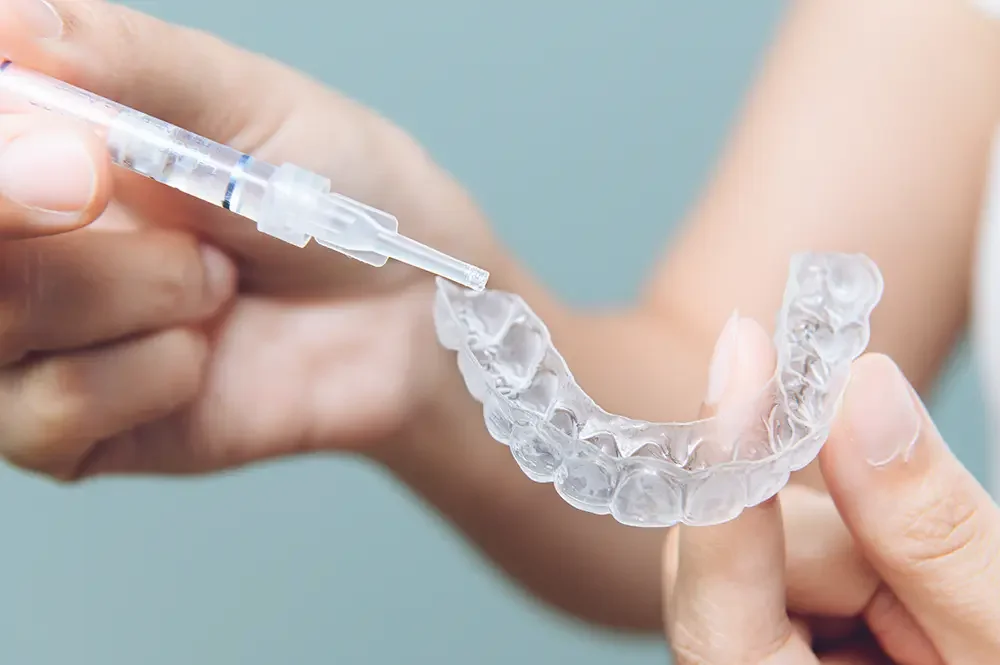
KöR whitening trays and refrigerated gel on a tray

Whitening gel works by moving through your enamel to break up stains underneath. Sensitivity happens when that gel also reaches the nerve, or when the gel dehydrates the tooth on the way. Understanding those two mechanisms explains why some systems hurt and others do not.

Why whitening zings

Peroxide gel opens tiny channels in the enamel called dentinal tubules. Fluid inside those tubules shifts, and the nerve reads that movement as a sharp, cold-like pain. The stronger and faster the gel, the more the tubules open, and the more it zings.

Bright lights and lasers make this worse. They heat the tooth to speed up the reaction, which dehydrates the enamel. Dehydrated teeth look whiter for a day or two, then rebound as they rehydrate, and they hurt in the meantime.

What KöR does differently

KöR starts with the gel itself. Peroxide breaks down quickly at room temperature, so most gels are formulated extra strong to compensate. KöR gel is refrigerated from the factory to your chair, which keeps it stable and lets it work at a gentler concentration for longer.

Then the trays. Stock strips and boil-and-bite trays let saliva seep in, which deactivates the gel in about 30 minutes and pushes it onto your gums. KöR-Seal trays are made from a 3D scan of your teeth and seal at the gumline, so the gel stays put and active for six hours or more while you sleep.

What to expect at mend

We scan your teeth with the iTero Lumina, so there are no gooey impressions. Your custom trays arrive in about a week. You wear them overnight for two weeks with the refrigerated gel, then come in for a short, gentle in-office session to finish.

A desensitizing gel is included in the kit. Most patients report no sensitivity at all; a few notice mild tenderness on the first night that fades by the second.

If you have sensitive teeth already

Tell us. Exposed roots, recent fillings and gum recession all change how we sequence your whitening. Sometimes we treat the sensitivity first with fluoride and a desensitizing paste, then whiten. Sometimes we shorten the nightly wear. The goal is a result you keep, not a result you flinch through.

White teeth should not come with a wince.

If a past whitening attempt left you sore or disappointed, you did not fail; the system did. Learn how KöR works and what results look like on our teeth whitening page.

Quick answers

Most patients report little to no sensitivity. The refrigerated gel works at a gentler concentration and the sealed trays keep it off your gums.

About two weeks of overnight wear at home, followed by a short in-office finishing visit.

Usually, yes. We may treat the sensitivity first or shorten your nightly wear time. Tell us before you start.

They use a strong, fast-acting gel and do not seal against saliva, so the gel deactivates quickly and spills onto your gums.

Dr. Monique Sison
Written byDr. Monique Sison, DDS

Owner of mend dental in Irvine and a graduate of the University of the Pacific's Dugoni School of Dentistry. Dr. Sison writes and reviews every article for clinical accuracy.

Meet the team →

Tags:Teeth whiteningKöR whiteningSensitive teethWhitening sensitivityCosmetic dentist Irvine

Keep reading

All articles →
mend
(949) 251-0011 Book Appointment

Does whitening hurt? Why KöR is different.

Almost everyone who has tried whitening strips or an in-office light treatment has a story about the zing. That sharp, cold-air jolt is the number one reason people quit before they see a result. It is also, mostly, avoidable.

Dr. Monique Sison, DDS
Owner & dentist, mend dental
·4 min read

Whitening gel works by moving through your enamel to break up stains underneath. Sensitivity happens when that gel also reaches the nerve, or when the gel dehydrates the tooth on the way. Understanding those two mechanisms explains why some systems hurt and others do not.

Why whitening zings

Peroxide gel opens tiny channels in the enamel called dentinal tubules. Fluid inside those tubules shifts, and the nerve reads that movement as a sharp, cold-like pain. The stronger and faster the gel, the more the tubules open, and the more it zings.

Bright lights and lasers make this worse. They heat the tooth to speed up the reaction, which dehydrates the enamel. Dehydrated teeth look whiter for a day or two, then rebound as they rehydrate, and they hurt in the meantime.

What KöR does differently

KöR starts with the gel itself. Peroxide breaks down quickly at room temperature, so most gels are formulated extra strong to compensate. KöR gel is refrigerated from the factory to your chair, which keeps it stable and lets it work at a gentler concentration for longer.

Then the trays. Stock strips and boil-and-bite trays let saliva seep in, which deactivates the gel in about 30 minutes and pushes it onto your gums. KöR-Seal trays are made from a 3D scan of your teeth and seal at the gumline, so the gel stays put and active for six hours or more while you sleep.

What to expect at mend

We scan your teeth with the iTero Lumina, so there are no gooey impressions. Your custom trays arrive in about a week. You wear them overnight for two weeks with the refrigerated gel, then come in for a short, gentle in-office session to finish.

A desensitizing gel is included in the kit. Most patients report no sensitivity at all; a few notice mild tenderness on the first night that fades by the second.

If you have sensitive teeth already

Tell us. Exposed roots, recent fillings and gum recession all change how we sequence your whitening. Sometimes we treat the sensitivity first with fluoride and a desensitizing paste, then whiten. Sometimes we shorten the nightly wear. The goal is a result you keep, not a result you flinch through.

White teeth should not come with a wince.

If a past whitening attempt left you sore or disappointed, you did not fail; the system did. Learn how KöR works and what results look like on our teeth whitening page.

Quick answers

{{ f.a }}

Written byDr. Monique Sison, DDS

Owner of mend dental in Irvine and a graduate of the University of the Pacific's Dugoni School of Dentistry. Dr. Sison writes and reviews every article for clinical accuracy.

Meet the team →

Tags:{{ tg }}

Keep reading

All articles →