
mend
(949) 251-0011 Book Appointment

Invisalign vs. braces: which is right for your smile?

Thinking about straightening your teeth but not sure whether to go with braces or clear aligners? You're not alone. I help patients make this call every week, and the honest answer is that both work. The right one depends on your teeth, your bite and your life.

Dr. Monique SisonDr. Monique Sison, DDS
Owner & dentist, mend dental
·5 min read
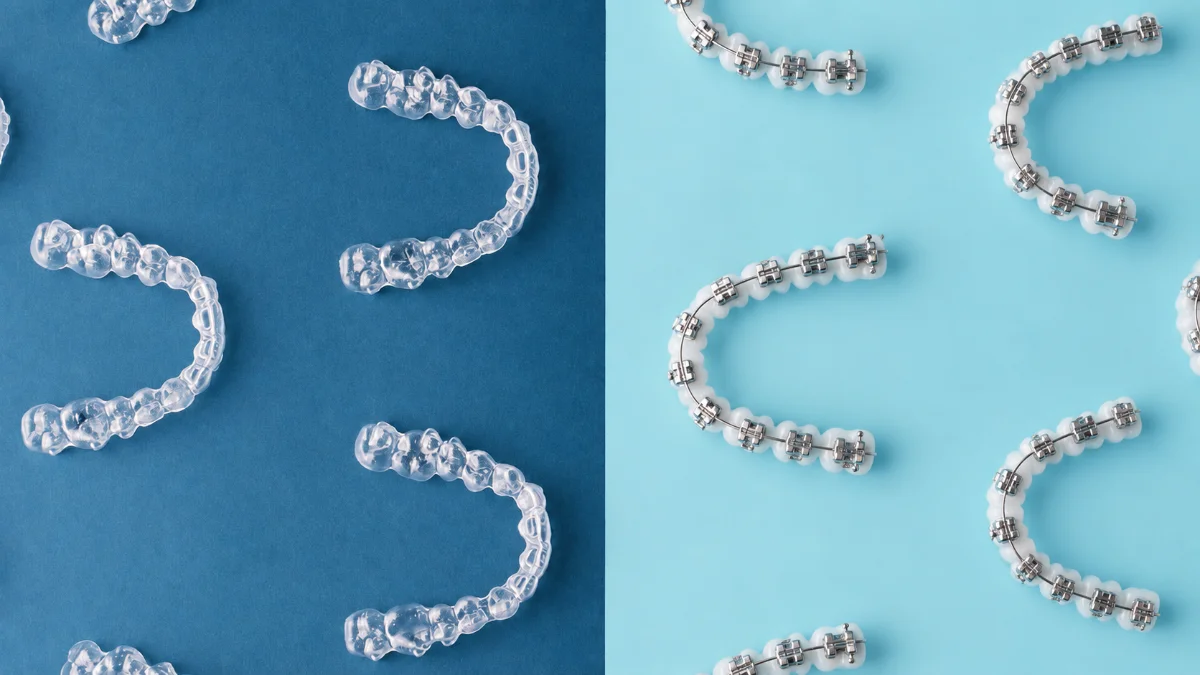
Clear aligner next to a set of braces on a tray

Both braces and Invisalign move teeth the same way: steady, gentle pressure over months. The difference is in how they feel, how they look, and how much of the work depends on you. Here's how I think through it with patients in the chair.

Appearance

Braces use brackets and wires that are visible even in clear or ceramic versions. Invisalign uses smooth, clear trays that most people never notice. If you have a job, a wedding or a school year where you'd rather not announce your orthodontics, aligners win here easily.

Comfort and daily life

Braces are fixed in place and can rub the inside of your cheeks and lips, especially after an adjustment. Aligners are removable and custom-made to your teeth, so there are no sharp edges. You take them out to eat, which means no food restrictions, and brushing and flossing stay exactly as they were.

Treatment time and visits

Treatment time is similar for both, usually 12 to 24 months depending on the case. Invisalign tends to need fewer and shorter office visits, and I can hand you several sets of trays at once so a busy stretch or a trip doesn't stall your progress.

Complex cases

This is where I'll be straight with you. For severe bite corrections or big rotations, braces can still be the more predictable tool. Invisalign has come a long way and handles most mild to moderate cases beautifully, but I'd rather tell you that up front than sell you trays that will struggle.

Cost and insurance

The cost is often comparable, and many plans now cover both. You'll get a written estimate before anything starts, with what your plan is expected to pay and what you'll owe.

So, which one?

If appearance, comfort and flexibility matter most and your case is mild to moderate, Invisalign is usually the better fit. If your bite needs major correction, braces may do the job more reliably. Either way, start with a consultation and a scan, and we'll show you what your teeth actually need.

See your straighter smile before you start.

At mend we use iTero 3D scanning to preview your result before treatment begins, so you're choosing with your eyes open. Read more on our Invisalign page, or book a free consultation.

Quick answers

For mild to moderate crowding, spacing and bite issues, yes. For severe rotations or major bite corrections, braces can be more predictable, and I'll tell you if that's your case.

Both typically take 12 to 24 months. Invisalign usually means fewer office visits along the way.

Many plans cover Invisalign the same way they cover braces. We check your benefits and give you a written estimate before you decide.

Dr. Monique Sison
Written byDr. Monique Sison, DDS

Owner of mend dental in Irvine and a graduate of the University of the Pacific's Dugoni School of Dentistry. Dr. Sison writes and reviews every article for clinical accuracy.

Meet the team →
Tags:Invisalign vs bracesClear alignersInvisalign IrvineAdult braces alternativeInvisalign consultation

Keep reading

All articles →
mend
(949) 251-0011 Book Appointment

Invisalign vs. braces: which is right for your smile?

Thinking about straightening your teeth but not sure whether to go with braces or clear aligners? You're not alone. I help patients make this call every week, and the honest answer is that both work. The right one depends on your teeth, your bite and your life.

Dr. Monique Sison, DDS
Owner & dentist, mend dental
·5 min read

Both braces and Invisalign move teeth the same way: steady, gentle pressure over months. The difference is in how they feel, how they look, and how much of the work depends on you. Here's how I think through it with patients in the chair.

Appearance

Braces use brackets and wires that are visible even in clear or ceramic versions. Invisalign uses smooth, clear trays that most people never notice. If you have a job, a wedding or a school year where you'd rather not announce your orthodontics, aligners win here easily.

Comfort and daily life

Braces are fixed in place and can rub the inside of your cheeks and lips, especially after an adjustment. Aligners are removable and custom-made to your teeth, so there are no sharp edges. You take them out to eat, which means no food restrictions, and brushing and flossing stay exactly as they were.

Treatment time and visits

Treatment time is similar for both, usually 12 to 24 months depending on the case. Invisalign tends to need fewer and shorter office visits, and I can hand you several sets of trays at once so a busy stretch or a trip doesn't stall your progress.

Complex cases

This is where I'll be straight with you. For severe bite corrections or big rotations, braces can still be the more predictable tool. Invisalign has come a long way and handles most mild to moderate cases beautifully, but I'd rather tell you that up front than sell you trays that will struggle.

Cost and insurance

The cost is often comparable, and many plans now cover both. You'll get a written estimate before anything starts, with what your plan is expected to pay and what you'll owe.

So, which one?

If appearance, comfort and flexibility matter most and your case is mild to moderate, Invisalign is usually the better fit. If your bite needs major correction, braces may do the job more reliably. Either way, start with a consultation and a scan, and we'll show you what your teeth actually need.

See your straighter smile before you start.

At mend we use iTero 3D scanning to preview your result before treatment begins, so you're choosing with your eyes open. Read more on our Invisalign page, or book a free consultation.

Quick answers

{{ f.a }}

Written byDr. Monique Sison, DDS

Owner of mend dental in Irvine and a graduate of the University of the Pacific's Dugoni School of Dentistry. Dr. Sison writes and reviews every article for clinical accuracy.

Meet the team →

Tags:{{ tg }}

Keep reading

All articles →