
mend
(949) 251-0011 Book Appointment

What I check for oral cancer at every dental visit.

Every exam at mend dental in Irvine includes an oral cancer screening. It takes about two minutes, you may not even notice it happening, and it is the part of the checkup most likely to matter years from now.

Dr. Monique SisonDr. Monique Sison, DDS
Owner & dentist, mend dental
·4 min read
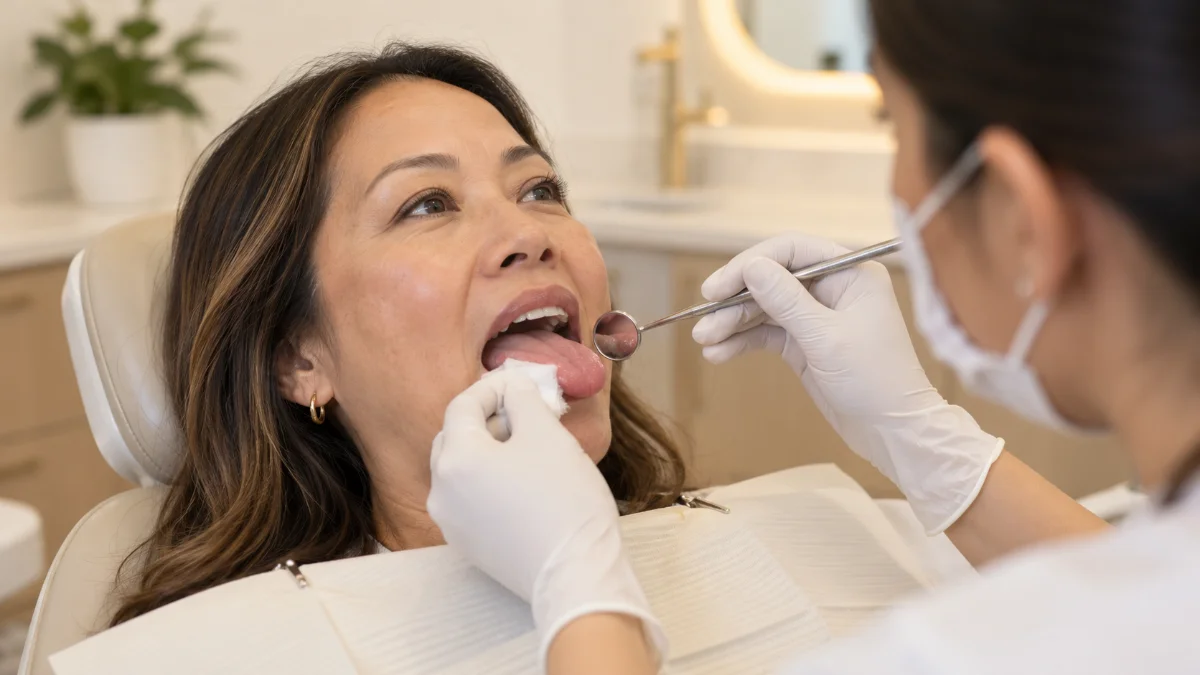
Dr. Sison examining a patient's tongue and soft tissue

Oral cancer found early is very treatable. Found late, it is not. The difference is usually whether someone was looking.

What I actually look at

I am looking for anything that does not match the other side: a white or red patch, a sore that has not healed in two weeks, a lump, a rough area, or numbness. Most of what I find is harmless. The screening is how we know.

  • Lips, inside and out
  • Tongue, top, sides and underneath
  • Floor of the mouth and the roof
  • Inside of the cheeks and the back of the throat
  • Gums and the tissue around any dentures or appliances
  • Lymph nodes along the jaw and neck, by touch

Who is at higher risk

Tobacco in any form and heavy alcohol use are the classic risks. HPV has become a major cause of throat cancers in people who have never smoked. Age, a lot of sun exposure on the lips, and a previous oral cancer all raise the odds.

If any of those apply to you, I do not screen differently, I just pay closer attention to small changes between visits. Tell us if your history changes.

What happens if I see something

Most spots are a bite injury, a canker sore, or irritation from a sharp edge. I note the location and size, and if it is still there in two weeks, we look again. If a spot is suspicious on the first look, or has not resolved at the recheck, I refer you to an oral surgeon or specialist for a biopsy. That is the only way to know for certain, and the sooner it happens the better.

I will tell you plainly what I see and why I am or am not concerned. No alarm, no vagueness.

What you can check at home

Once a month, in good light, look at your tongue, under it, and inside your cheeks. You are looking for anything new that is not on the other side too. If something has been there two weeks, call us. You do not need a full appointment to have me look at one spot.

Noticed a spot that has not healed?

Call (949) 251-0011 and we will take a look. Screening is part of every exam; details on our oral cancer screening page.

Quick answers

At every dental exam. At mend it is built into every checkup, usually twice a year.

A white or red patch, a sore that does not heal in two weeks, a lump, or a rough spot, often painless. Numbness is another sign.

Yes. HPV is now a major cause of throat cancers in people who have never smoked.

Harmless spots get a two-week recheck. Suspicious spots are referred to a specialist for biopsy, which is the only way to be certain.

Dr. Monique Sison
Written byDr. Monique Sison, DDS

Owner of mend dental in Irvine and a graduate of the University of the Pacific's Dugoni School of Dentistry. Dr. Sison writes and reviews every article for clinical accuracy.

Meet the team →

Tags:Oral cancer screeningMouth sore two weeksOral cancer signsDental exam IrvineHPV oral cancer

Keep reading

All articles →
mend
(949) 251-0011 Book Appointment

What I check for oral cancer at every dental visit.

Every exam at mend dental in Irvine includes an oral cancer screening. It takes about two minutes, you may not even notice it happening, and it is the part of the checkup most likely to matter years from now.

Dr. Monique Sison, DDS
Owner & dentist, mend dental
·4 min read

Oral cancer found early is very treatable. Found late, it is not. The difference is usually whether someone was looking.

What I actually look at

I am looking for anything that does not match the other side: a white or red patch, a sore that has not healed in two weeks, a lump, a rough area, or numbness. Most of what I find is harmless. The screening is how we know.

  • Lips, inside and out
  • Tongue, top, sides and underneath
  • Floor of the mouth and the roof
  • Inside of the cheeks and the back of the throat
  • Gums and the tissue around any dentures or appliances
  • Lymph nodes along the jaw and neck, by touch

Who is at higher risk

Tobacco in any form and heavy alcohol use are the classic risks. HPV has become a major cause of throat cancers in people who have never smoked. Age, a lot of sun exposure on the lips, and a previous oral cancer all raise the odds.

If any of those apply to you, I do not screen differently, I just pay closer attention to small changes between visits. Tell us if your history changes.

What happens if I see something

Most spots are a bite injury, a canker sore, or irritation from a sharp edge. I note the location and size, and if it is still there in two weeks, we look again. If a spot is suspicious on the first look, or has not resolved at the recheck, I refer you to an oral surgeon or specialist for a biopsy. That is the only way to know for certain, and the sooner it happens the better.

I will tell you plainly what I see and why I am or am not concerned. No alarm, no vagueness.

What you can check at home

Once a month, in good light, look at your tongue, under it, and inside your cheeks. You are looking for anything new that is not on the other side too. If something has been there two weeks, call us. You do not need a full appointment to have me look at one spot.

Noticed a spot that has not healed?

Call (949) 251-0011 and we will take a look. Screening is part of every exam; details on our oral cancer screening page.

Quick answers

{{ f.a }}

Written byDr. Monique Sison, DDS

Owner of mend dental in Irvine and a graduate of the University of the Pacific's Dugoni School of Dentistry. Dr. Sison writes and reviews every article for clinical accuracy.

Meet the team →

Tags:{{ tg }}

Keep reading

All articles →